What to Expect From a Document Digitization Project
- By Rahil Liyagath - Sales Manager – Digitization Services, EDC
Many digitization projects begin with a single sentence from someone who has inherited a storeroom full of paper: we need to digitize all our files.
It is a reasonable request, and it leaves almost everything still to be decided. What counts as a file, which documents matter, what people will search for once they are digital and what should happen to the paper afterwards are all open questions. The quality of the finished archive depends on how well they are answered before the first page is scanned.

It starts with an inventory and a sample
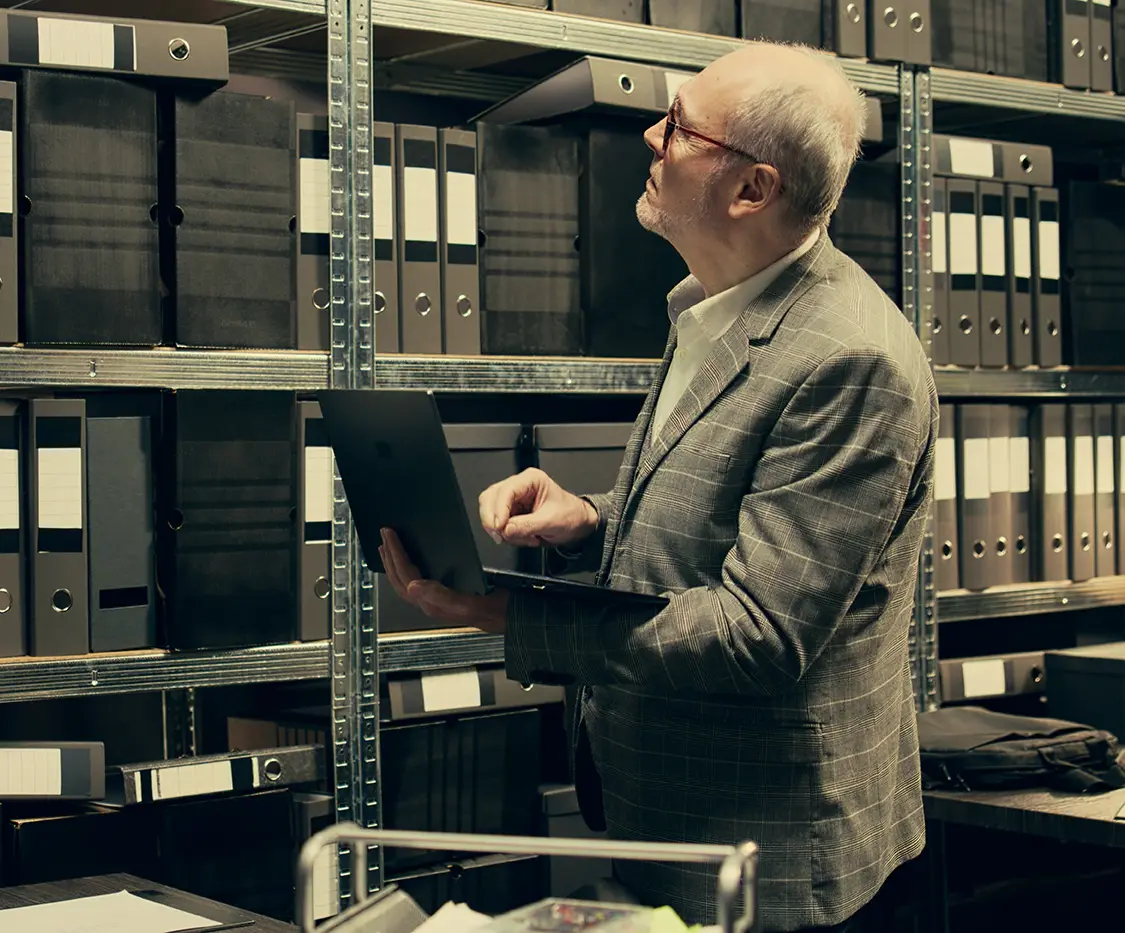
The first useful step is a walk through the records with someone who knows them. The aim is a list of the document types held, roughly how much of each there is, where it is kept and what condition it is in. Volume is usually estimated in boxes or linear meters at this stage and refined as the project proceeds.
Alongside the inventory, samples of each document type are collected and examined. Real samples show things a description never captures, such as stapled bundles, carbon copies, fading thermal paper, bound registers, oversized drawings and handwritten notes in Arabic or English. Each of these affects how documents are prepared and captured, and some need different equipment altogether.
Deciding what people will search for
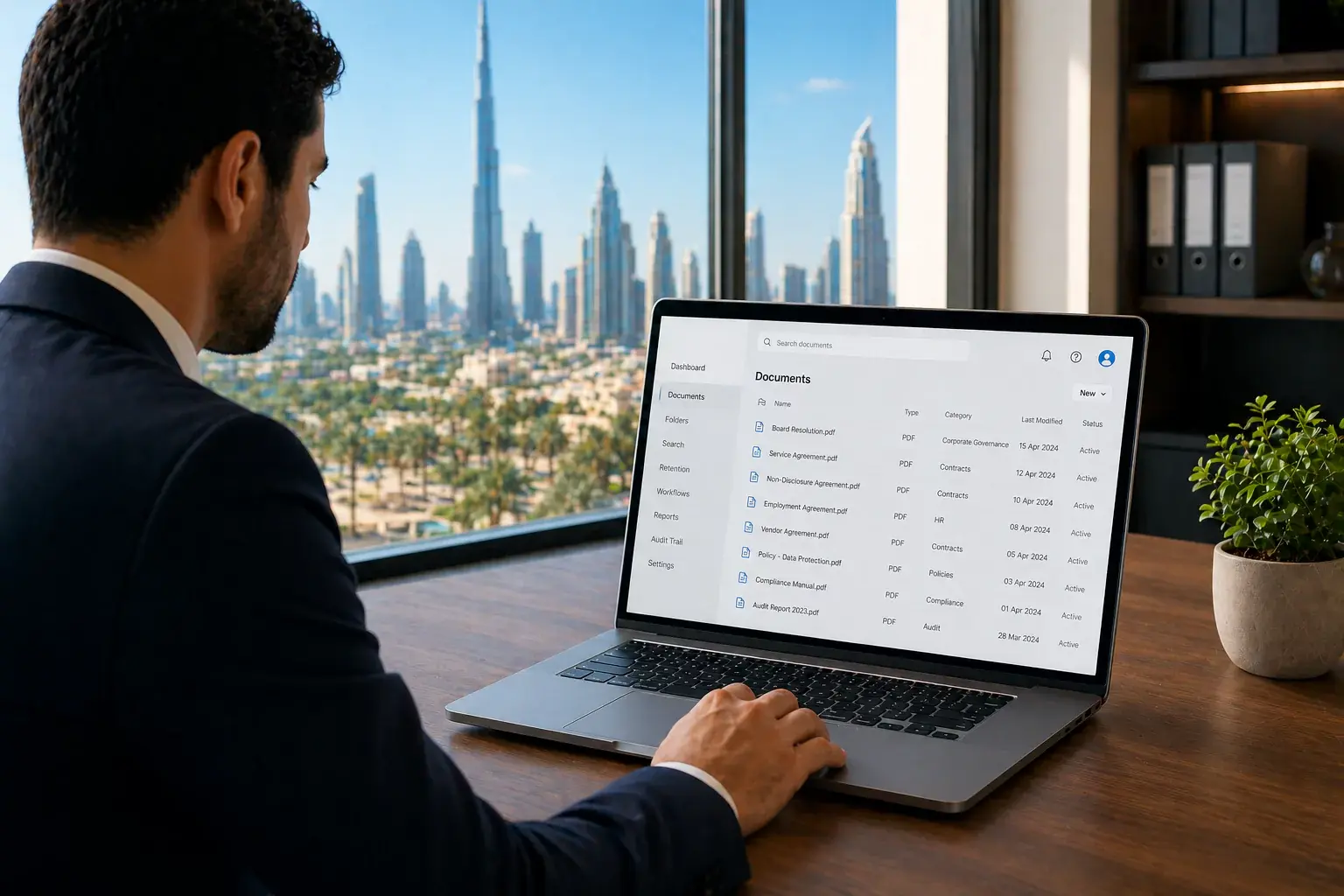
The most important decision in the project is the index, meaning the fields each document is labeled with so it can be found later. A finance archive might be indexed by vendor, invoice date, amount and entity, while a personnel archive is usually organized by employee number and document type. The right fields are the ones people already use when they ask for a document, and agreeing on them up front avoids expensive rework.
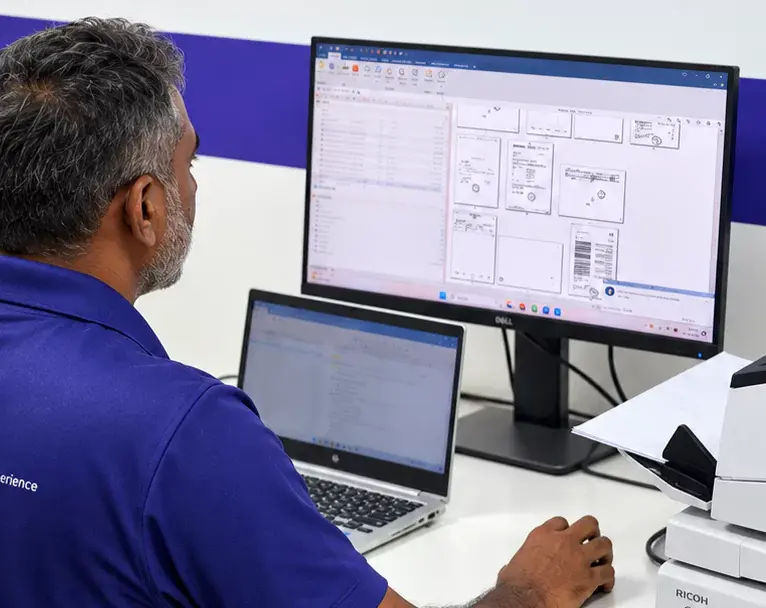
Indexing can be keyed by operators or extracted with AI document processing, which classifies each document and reads its fields automatically, with templates used where forms follow a fixed layout. Most projects use a mix, with AI handling the bulk of the volume and people checking the values the system is not confident about.
The pilot is where the specification is tested
Before full production, a well-run project processes a pilot batch from each document type and returns it to the client for review. This is the point at which image quality, file naming, index values and folder structure are checked against what the client actually needs.
Pilots almost always produce corrections, because a field turns out to be missing or one document type needs to be split into two. Making those changes on a few hundred documents is simple, and making them after a few hundred thousand is expensive. Once the pilot is accepted, the output specification is confirmed in writing and production runs against it.
Where the work happens and how the boxes move
Scanning can take place at the client's premises, which suits records that cannot leave the building, or at the provider's secure facility, which suits large volumes. Many projects use both, scanning the most sensitive material on site and moving the rest.
When records travel, each box is logged at collection and on arrival, and again at every stage of preparation and scanning until it is returned or placed in storage. Delivery is usually sequenced, with completed batches handed back in an agreed order so the departments that need their records first are not waiting for the whole archive.
How quality is checked
Quality control in a digitization project works on two levels. Images are checked for legibility and completeness, so every page is captured and readable. Index values are checked for accuracy through sampled reviews and, where possible, cross-checks against data the client already holds in other systems such as an ERP or an HR platform.
The client should receive regular progress reports during production and a complete handover report at the end, setting out what was received, what was processed, any exceptions found and where every original now sits.
What happens to the paper
The fate of the paper originals is often the last decision made in a project, although it is far better settled at the start. Once records are digitized, the originals are returned to the client or held in managed storage, where each box stays barcoded and linked to its digital copies for as long as it needs to be kept.
A request that starts with one sentence can still produce an archive people trust, provided the questions behind that sentence are answered in the right order.
EDC runs digitization projects from the first inventory and pilot through to delivery into a managed document repository, working at client premises or at our secure facility in the UAE.