Digitization projects often begin with a clear and reasonable objective: reduce dependence on paper.
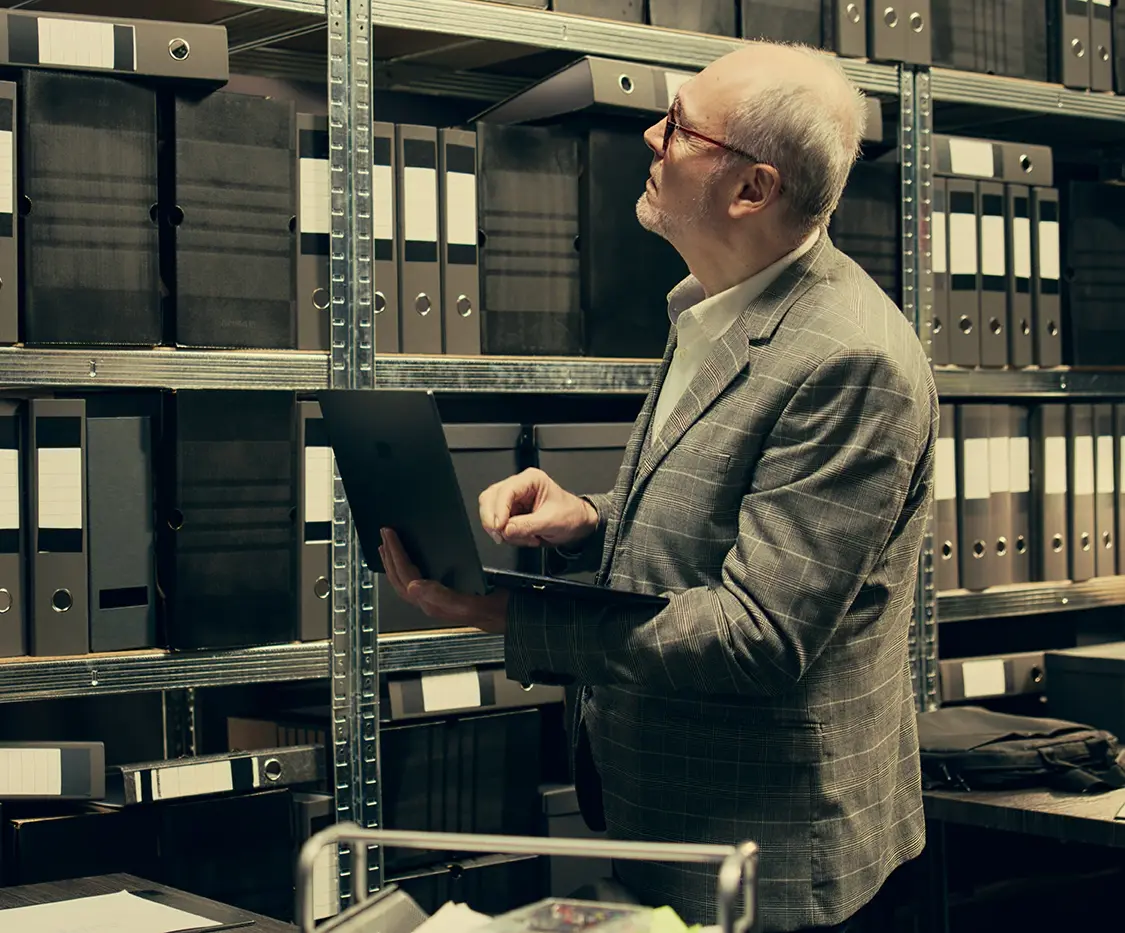
Physical archives consume space, slow access to information, and make large-scale record management difficult. Scanning documents into digital form seems like the obvious solution.
Yet many organizations discover that the benefits of digitization plateau quickly. Documents become digital, but retrieving the right version remains difficult. Ownership is unclear. Duplicate records appear in multiple repositories. Teams begin saving copies locally because they no longer trust the central archive.
The problem is rarely the scanning process itself. It lies in the absence of governance around how digital documents are structured, described, accessed, and maintained.
Digitization without governance simply moves disorder from cabinets into servers.
Digitization Changes Format. Governance Creates Order.
Scanning technology solves a physical problem: converting paper into digital files.
What it does not solve is the question of how those files should live within the organization’s information environment.
Once documents are digitized, they still need to be classified, indexed, secured, and governed. Without that structure, digital archives grow rapidly while becoming progressively harder to navigate.
Employees search for documents that exist but cannot be located. Multiple versions circulate simultaneously. Retention policies are defined in theory but rarely enforced in practice.
The real value of digitization emerges only when it is paired with clear governance rules that define how documents move through their lifecycle.
Metadata Is the Foundation of Retrieval and Control
In a paper archive, a document’s location is defined by its physical folder and cabinet.
In digital environments, metadata performs that role.
Metadata describes the document and enables systems to organize, retrieve, and govern it. Without consistent metadata standards, digital repositories become fragmented very quickly.
Effective digitization programs typically define a small set of critical metadata fields that apply across document types. These may include:
- document type or category
- originating department or business unit
- owner or responsible function
- date of creation or registration
- related transaction or case reference
- retention classification
The goal is not to capture as much metadata as possible. Excessive data entry slows productivity and introduces errors. Instead, organizations focus on capturing the information that allows documents to be reliably located, governed, and connected to business processes.
Whenever possible, metadata should be sourced automatically from existing systems rather than entered manually. Integrating the document management environment with core platforms — such as ERP systems, CRM platforms, or case management systems — helps ensure consistency while reducing the risk of mismatched or duplicated records.
Quality Control Determines Whether Archives Can Be Trusted
Digitization programs often focus heavily on scanning throughput. While speed is important, the integrity of the captured data ultimately determines whether the archive will be usable.
Quality control processes should therefore be designed into the workflow from the beginning.
Typical quality checkpoints include validation of scanned images, verification of metadata accuracy, and sampling procedures that detect indexing errors early in the process. These checks help ensure that documents entering the archive remain reliable and searchable over time.
Automated technologies can also support these controls. Intelligent Document Processing (IDP) tools, for example, can extract key information directly from documents and compare it with system data. This reduces manual entry, improves consistency, and increases overall productivity in large-scale digitization projects.
When deployed correctly, automation supports governance rather than replacing it.
Governance Extends Beyond Classification
Metadata and indexing establish the structure of the archive. Governance determines how documents behave once they are inside it.
This includes rules governing access, editing, version control, and retention.
Access permissions should reflect the organization’s structure and responsibilities. Employees require access to the documents relevant to their roles, while sensitive information remains restricted to authorized users. These permissions often combine role-based access with contextual rules tied to departments, projects, or transactions.
Document editing must also be controlled carefully. Systems should distinguish between view rights, editing rights, and approval authority. Version management ensures that updates are tracked properly and that the authoritative version of a document remains identifiable.
Audit logs provide the final layer of accountability. Every access, modification, or approval should leave a traceable record. This visibility becomes critical during audits, investigations, or regulatory reviews.
Governance Enables Digitization to Deliver Real Value
Digitization programs succeed when they do more than convert paper into images.
Their true value lies in building structured information environments where documents are searchable, controlled, and reliably connected to business processes.
-
Metadata standards create structure.
-
System integrations ensure consistency.
-
Quality controls preserve integrity.
-
Access rules and audit logs enforce accountability.
Together, these elements transform digitization from a scanning exercise into an operational capability.