

EDC Preserves and Structures Legacy Records for a Government Investment Entity
INDUSTRY
SCOPE
DOCUMENT VOLUME
PROJECT DURATION
KEY CHALLENGE
OUTCOME
Not all digitization projects are defined by scale. In some cases, the challenge lies in the condition and importance of the records themselves.
For a UAE-based government investment entity, the priority was to preserve and organize a set of legacy documents that were both fragile and operationally relevant. The objective was not only to convert them into digital format, but to ensure they remained usable and accessible over time.
Client Overview
The client is a government investment entity responsible for managing strategic assets and initiatives. Its records include a mix of administrative, financial, and historical documents that support both day-to-day operations and longer-term decision-making.
Challenges and Requirements
Condition of legacy documents
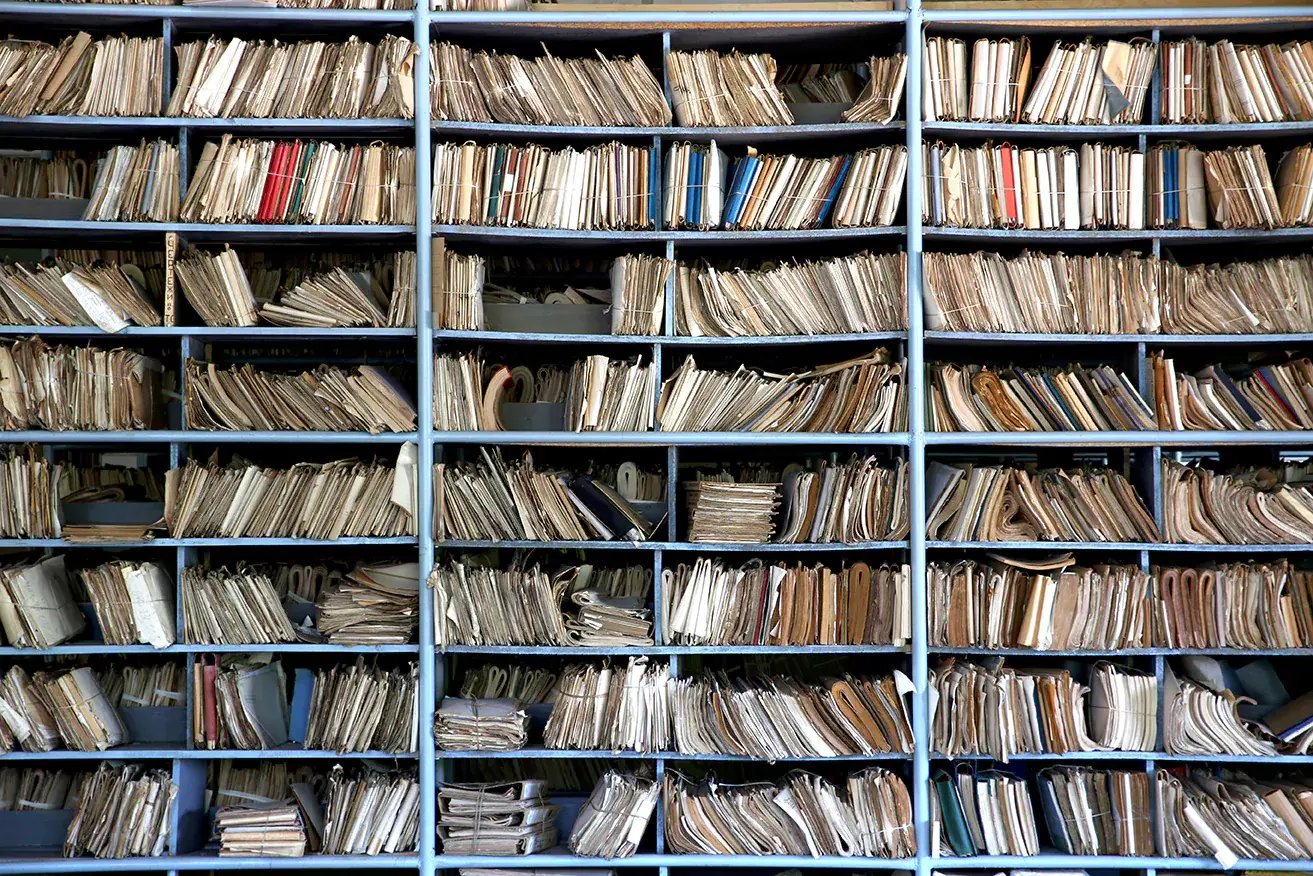
Many of the records had aged significantly, with visible deterioration affecting readability. Standard scanning methods risked either damaging the documents or producing low-quality outputs.
Maintaining clarity and accuracy
The value of these records depended on their usability. Poor image quality or incomplete capture would limit their effectiveness once digitized.
Adoption of a structured system
Beyond digitization, the client required a document management system that could support organized storage and retrieval, along with basic user adoption within the department.
Solution
EDC implemented a digitization process designed for careful handling and quality control.
Fragile documents were processed using a combination of flatbed and manual scanning techniques to avoid damage during handling. Additional attention was given to document preparation to ensure accurate alignment and capture.
Image enhancement tools were applied where needed to improve readability, addressing issues such as faded text and discoloration.
Quality checks were carried out throughout the process to ensure that each document met the required standards before being finalized.
Alongside digitization, a document management system was introduced to provide a structured environment for storing and accessing records. Training was provided to the client’s team to support day-to-day use of the system and ensure that the archive could be effectively maintained.

Results and Impact
The project resulted in a digital archive that preserved the integrity of the original records while making them more accessible.
Documents that were previously difficult to handle and retrieve became available in a structured format, supporting both operational use and long-term reference.
The introduction of a document management system provided a clear framework for organizing records, reducing reliance on manual processes and improving consistency in how documents were stored and accessed.
With basic user training in place, the client was able to integrate the system into its daily workflow, ensuring that the archive remained active rather than static.