

Transforming a Large-Scale Physical Archive for a UAE Government Finance Entity
INDUSTRY
SCOPE
VOLUME
DURATION
CHALLENGE
OUTCOME
EDC Helps a UAE Government Finance Entity Transform a Large-Scale Physical Archive
EDC partnered with a UAE-based government finance entity to digitize a large archive of physical records accumulated over many years. The project focused on converting unstructured, warehouse-stored documents into a structured digital repository that could support faster access, improved control, and more efficient day-to-day operations.
The client is a government finance entity responsible for managing financial operations, records, and reporting across multiple departments. With a long history of paper-based processes, the organization maintained extensive physical archives stored offsite, making access and retrieval both time-consuming and operationally demanding.
Challenges
Managing a large, unstructured archive
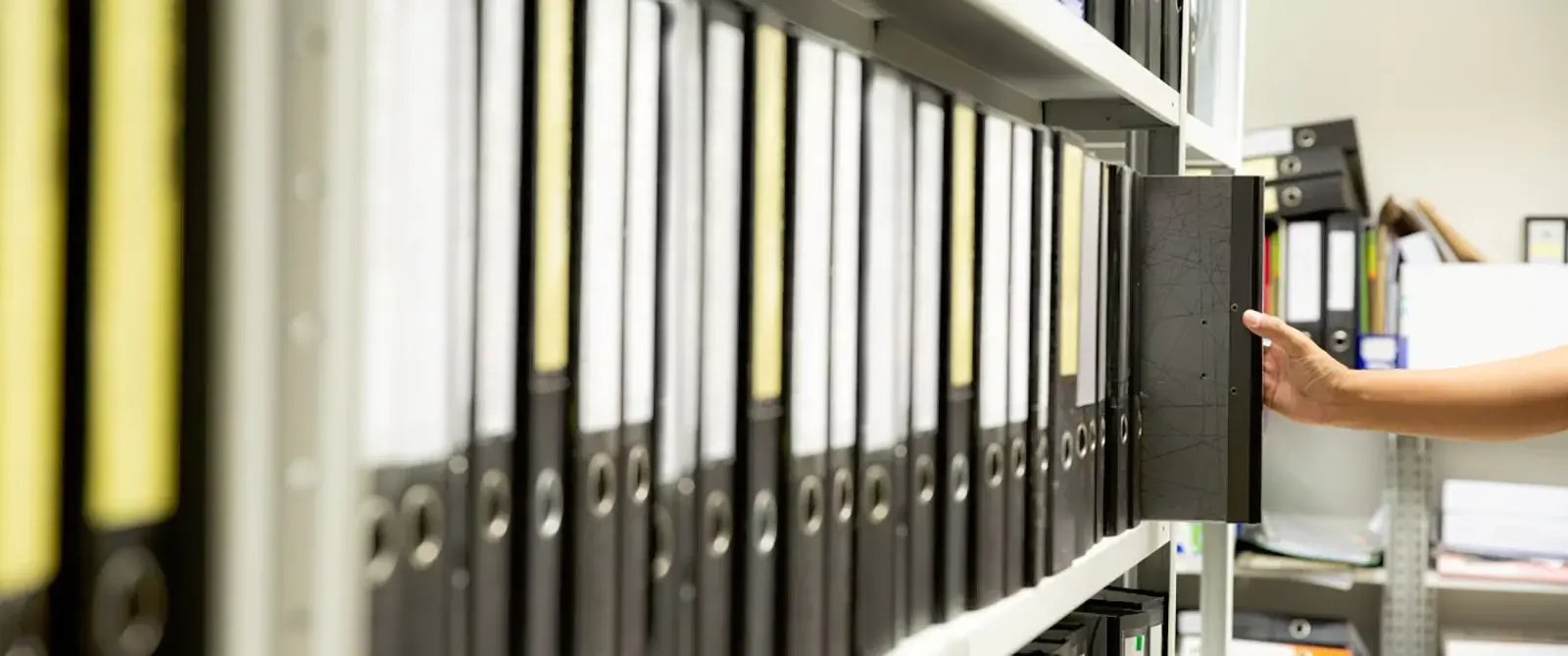
A significant portion of the client's records was stored in warehouse conditions. Files were accumulated over time with limited standardization, resulting in mixed, unorganized, and often poorly labeled documents. Retrieving specific records required manual effort and institutional knowledge, slowing down internal processes.
Condition and handling of documents
Many of the files had been stored for extended periods and were affected by dust and environmental exposure. This required additional preparation before scanning, including cleaning, sorting, and organizing documents to ensure they could be processed without compromising quality.
Need for structured digitization at scale
Given the volume running into millions of documents, the client required a controlled, methodical approach to digitization. The process needed to maintain consistency in classification and indexing while handling large batches efficiently.
Solution
EDC implemented a structured digitization process designed to handle both the scale and condition of the archive. Documents were first prepared through sorting and cleaning to ensure they were suitable for scanning. Given the state of the files, additional care was taken during handling to maintain document integrity and avoid processing issues.
A systematic approach to classification and indexing was introduced, bringing consistency to previously unstructured records. Files were organized according to agreed naming conventions and metadata standards, allowing them to be stored in a way that supports straightforward retrieval.
To maintain continuity throughout the project, regular equipment maintenance and quality checks were carried out. This ensured that scanning performance remained stable despite the challenging nature of the source material and the extended duration of the project.
Following the main digitization effort, EDC was engaged to process a smaller set of sensitive financial records that required a more controlled approach. These documents, many of which were fragile, were handled using manual and flatbed scanning methods to preserve their condition while maintaining image clarity. Additional quality checks and image enhancement techniques were applied to ensure accuracy and readability.
Results and Impact
The digitization of the archive fundamentally changed how the organization accessed and managed its records. Previously stored documents that were difficult to locate became accessible through a structured digital system, reducing reliance on physical storage and minimizing the time required to retrieve information.
The introduction of standardized classification brought greater consistency to record management, making it easier for different departments to locate and use information without depending on manual processes. The project also reduced the operational burden associated with maintaining large physical archives, while improving control over document handling and storage.
Overall, the organization moved from a reactive, manual approach to records management to a more controlled and accessible system better aligned with its operational needs.